
How to Build Muscle: The Complete Beginner's Guide
Building muscle doesn't need to be complicated.
Walk into any gym and you'll see people following completely different routines, using different exercises and spending different amounts of time training. Some people swear by heavy weights and low repetitions, while others prefer lighter weights and higher repetitions. Some train five or six days a week, while others make excellent progress training three times.
So where should a beginner start?
The truth is that building muscle comes down to a handful of fundamentals. You need to train consistently, give your muscles a reason to adapt, eat enough of the right foods, recover properly and give the process enough time to work.
Once you understand those principles, building a muscle-building routine becomes much simpler.
This guide explains the fundamentals of muscle growth and gives you a practical starting point if you're beginning your fitness journey.
What Actually Makes Muscles Grow?
Muscle growth, also known as hypertrophy, happens when your body adapts to resistance training.
When you train with weights, your muscles are placed under mechanical tension. This creates a stimulus that tells your body that the muscles need to become stronger and better equipped to handle that workload in the future.
Your body then repairs and adapts to the training stimulus during recovery.
That adaptation is what allows you to gradually become stronger and, over time, build more muscle.
However, simply lifting weights isn't enough.
If you train hard but don't eat enough, recovery can suffer. If you eat well but don't progressively challenge your muscles, your training stimulus may not be strong enough. If you train and eat properly but consistently neglect sleep and recovery, your progress can suffer as well.
Muscle growth is therefore best thought of as a combination of:
Training + Nutrition + Recovery + Consistency
All four matter.
1. Start With Resistance Training
The foundation of building muscle is resistance training.
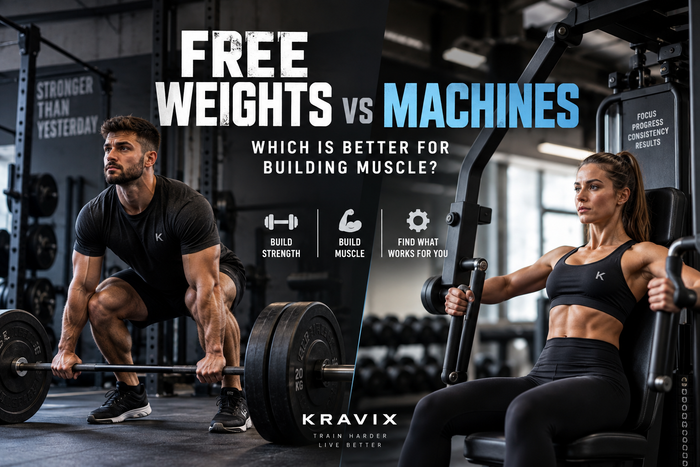
For most beginners, this means using weights in a gym, although resistance bands, machines and bodyweight exercises can also be effective.
The goal isn't simply to move a weight from point A to point B. You want to train the target muscles through a controlled range of motion and gradually challenge them over time.
A good beginner's programme should include exercises that train the major muscle groups, including:
- Chest
- Back
- Shoulders
- Legs
- Arms
- Core
You don't need dozens of exercises for each muscle group.
In fact, beginners can often make excellent progress with a relatively simple programme built around movements such as squats, presses, rows, pulldowns, hinges, curls and triceps exercises.
The important thing is learning good technique and building consistency before worrying about advanced training methods.
2. Progressive Overload Is One of the Keys to Growth
One of the most important concepts to understand when building muscle is progressive overload.
Your body adapts to the demands you place on it.
If you perform exactly the same workout, with exactly the same weight and repetitions, week after week, eventually your body has less reason to adapt.
Progressive overload means gradually increasing the demands placed on your muscles.
That doesn't necessarily mean adding weight to every exercise every week.
You could progressively overload an exercise by:
- Increasing the weight
- Performing more repetitions
- Increasing the number of sets
- Improving your technique
- Increasing your range of motion
- Controlling the movement more effectively
- Performing the same workload with better form
For example, imagine you can perform 8 repetitions of an exercise with 50 kg.
Over time, you might progress to 9 repetitions, then 10. Eventually, you may be able to increase the weight and work back up from 8 repetitions.
That is progress.
You don't need to destroy yourself in every workout. You need to give your body a reason to improve and then consistently give it the opportunity to adapt.
3. How Many Repetitions Should You Do?
There is no single magical repetition range for building muscle.
Muscle growth can occur across a relatively broad range of repetitions when sets are sufficiently challenging.
For beginners, somewhere around 6–15 repetitions per set is a practical starting point for many exercises.
That doesn't mean you should avoid higher or lower repetitions completely.
Heavier sets can be useful for developing strength, while higher-repetition sets can be particularly useful for exercises where using very heavy weights isn't practical.
The quality of the set matters more than obsessing over one specific number.
Instead of thinking:
"I must do exactly 10 repetitions."
Think:
"I'm going to perform controlled repetitions with good technique and gradually improve my performance over time."
4. How Many Sets Should You Do?
More isn't automatically better.
A common mistake beginners make is assuming that if one exercise is good, doing five or six exercises for the same muscle must be even better.
It isn't that simple.
Your training volume needs to be high enough to stimulate adaptation but manageable enough that you can recover and perform well in future sessions.
A beginner can often make progress with a relatively modest amount of training.
As you become more experienced, you can gradually adjust your training volume based on your progress, recovery and individual response.
Rather than copying the routine of an experienced bodybuilder, start with something manageable and build from there.
5. Train Consistently
The best workout programme in the world won't build much muscle if you only follow it occasionally.
Consistency is one of the biggest differences between people who make progress and people who constantly start over.
You don't need to train every day.
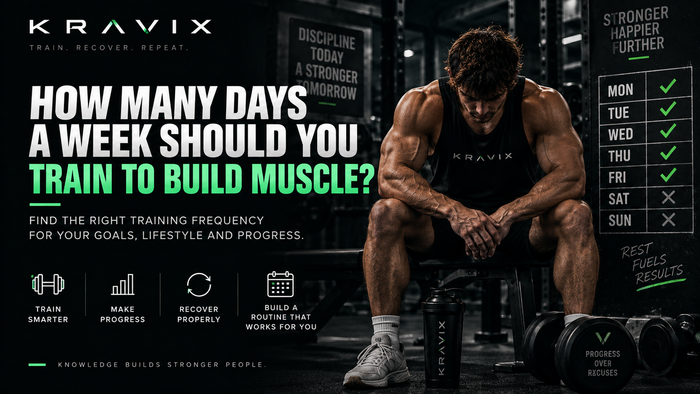
For many beginners, training around three to four times per week can provide an excellent balance between training stimulus and recovery.
The exact number of sessions isn't as important as finding a routine that you can realistically maintain.
If you can train three days every week for a year, that is far more valuable than training six days a week for three weeks before giving up.
Think long term.
6. Eat Enough Protein
Training provides the stimulus for muscle growth, but your body needs the raw materials required to repair and build tissue.
Protein is particularly important because it provides amino acids used in muscle protein synthesis.
Good protein sources include:
- Chicken
- Turkey
- Beef
- Fish
- Eggs
- Greek yoghurt
- Cottage cheese
- Milk
- Beans
- Lentils
- Tofu
- Protein powders
For people who regularly train and want to build or maintain muscle, a daily protein intake around 1.6 grams per kilogram of body weight is a useful evidence-based target, with some people choosing to consume somewhat more depending on their goals and circumstances.
You don't need to obsess over hitting an exact number every single day.
Instead, aim to include a good source of protein in your meals throughout the day.
Protein supplements can also be convenient when getting enough protein from normal food is difficult. They aren't magic and they don't replace a balanced diet, but they can make reaching your daily protein target easier.
7. You Need Enough Calories
Protein isn't the only part of nutrition that matters.
Your total calorie intake also plays an important role.
If your primary goal is gaining muscle, eating around maintenance calories or being in a modest calorie surplus can provide your body with additional energy to support growth.
However, that doesn't mean you need to dramatically increase your food intake.
A huge calorie surplus isn't a shortcut to more muscle.
Eating far more than you need can simply result in unnecessary fat gain alongside whatever muscle you build.
A controlled approach is usually more sensible.
If you're a beginner with higher body fat, your approach may be different. New lifters can sometimes gain muscle while losing fat, particularly when they are starting resistance training and improving their diet at the same time.
Your starting point matters.
8. Don't Be Afraid of Carbohydrates and Fats
A muscle-building diet shouldn't consist entirely of protein.
Carbohydrates provide an important source of energy for training, while dietary fats play important roles in normal health and bodily functions.
Good carbohydrate sources include:
- Rice
- Potatoes
- Oats
- Pasta
- Bread
- Fruit
- Whole grains
Good sources of dietary fat include:
- Nuts
- Seeds
- Olive oil
- Avocado
- Eggs
- Oily fish
The best diet is one that provides enough protein and calories while also giving you the nutrients and energy required to train effectively.
9. Sleep and Recovery Matter
You don't build muscle simply because you lifted weights.
Training provides the stimulus. Recovery gives your body the opportunity to adapt.
Sleep is therefore an important part of any muscle-building programme.
Most adults should aim for around 7–9 hours of sleep per night.
That won't always be possible, and one poor night's sleep isn't going to destroy your progress. The bigger concern is consistently getting insufficient sleep.
If you're training hard while regularly sleeping poorly, your performance, recovery and general wellbeing can all suffer.
Treat sleep as part of your training programme rather than something separate from it.
10. Don't Train the Same Muscle Hard Every Day
Muscles need recovery.
If you train your chest hard on Monday, immediately training it hard again on Tuesday isn't necessarily going to produce better results.
This is one reason structured programmes are useful.
You might train different muscle groups on different days, or use a full-body routine with rest days between sessions.
For example, a beginner might use a simple full-body routine three times per week.
Another person might prefer a four-day upper/lower split.
There isn't one perfect training split.
The important thing is that your programme provides enough training stimulus while allowing you to recover.
11. Focus on Technique Before Ego
One of the fastest ways to make training less productive is becoming obsessed with how much weight is on the bar.
If you're using a weight that forces you to swing, shorten the range of motion or completely lose control of the movement, you're probably using more weight than you can currently handle effectively.
Good technique should come first.
Learn how an exercise is supposed to feel and understand which muscles you're trying to train.
Then gradually increase the weight as your technique and strength improve.
Being able to lift a heavier weight isn't impressive if you're performing a completely different movement just to get it up.
Train for progress, not for the number written on the dumbbell.
12. Keep Track of Your Training
If you want to know whether you're progressing, record your workouts.
Write down:
- Exercise
- Weight
- Repetitions
- Sets
- Date
Over several weeks, you should begin to see patterns.
Perhaps your bench press has increased.
Maybe you're performing more repetitions with the same weight.
Maybe your squat technique has improved.
Maybe your measurements are changing.
Without recording anything, it can be surprisingly difficult to remember where you started.
Tracking your workouts turns training from guesswork into something you can actually measure.
13. Don't Change Your Programme Every Week
Another common beginner mistake is constantly searching for a better workout.
One week it's a bodybuilding programme.
The next week it's a high-intensity routine.
Then someone online recommends a completely different approach.
Eventually, you're doing a little bit of everything and consistently following nothing.
Give your programme time.
If you're making progress, there is usually no reason to completely change everything.
Adjust your programme when there's a reason to do so — not simply because you've seen a new workout on social media.
14. What About Supplements?
Supplements can have a place in a muscle-building diet, but they should come after the fundamentals.
Think of supplements as exactly what the name suggests: supplements to your diet and training, not replacements for them.
The basics should come first:
- Consistent resistance training
- Adequate protein
- Appropriate calorie intake
- Good sleep
- Proper recovery
- Consistency
Once those foundations are in place, certain supplements may be useful depending on your individual goals.
Creatine monohydrate is one of the most researched sports supplements and can help improve performance in high-intensity exercise and support increases in strength and lean mass when combined with resistance training.
Protein powder can also be useful simply because it makes getting enough protein more convenient.
Other supplements may have specific uses, but don't assume that an expensive supplement stack is necessary to make progress.
You can build an impressive physique without taking dozens of products.
15. How Long Does It Take to Build Muscle?
This is where patience becomes important.
Muscle growth takes time.
Beginners can often see noticeable improvements relatively quickly because the body is adapting to a completely new training stimulus. Strength can increase rapidly during the early stages of training as your nervous system becomes more efficient at performing the movements.
Visible changes in muscle size take longer.
Your rate of progress will depend on factors including:
- Training experience
- Genetics
- Nutrition
- Sleep
- Training quality
- Age
- Hormonal factors
- Starting body composition
- Consistency
Don't compare your first six months in the gym to somebody else's tenth year.
Your job is to become better than you were yesterday.
16. The Importance of Patience
Building muscle isn't a transformation that happens overnight.
There will be weeks where you feel stronger.
There will be weeks where your progress seems to stop.
There may even be periods where you feel like you're going backwards.
That's normal.
Your body doesn't change in a perfectly straight line.
The mistake is reacting to every small fluctuation by completely changing your diet or training programme.
Look at the bigger picture.
Compare your performance over months rather than days.
Take progress photos.
Record your body measurements.
Track your body weight when appropriate.
Keep a training log.
Those things give you a much clearer picture of what's actually happening.
A Simple Beginner Muscle-Building Checklist
If you're completely new to training, don't worry about making everything perfect.
Start with these fundamentals:
Train 3–4 times per week.
Focus on compound movements and useful isolation exercises.
Progress gradually.
Try to improve your repetitions, weight, technique or overall performance over time.
Eat enough protein.
Build your meals around quality protein sources.
Eat according to your goal.
A muscle-building phase generally requires sufficient calories, while someone primarily focused on fat loss will need a calorie deficit.
Sleep 7–9 hours where possible.
Recovery is part of the process.
Track your workouts.
Know what you did last week so you have something to beat.
Stay consistent.
Don't judge your progress after two weeks. Judge it after several months.
Don't chase perfection.
A good programme followed consistently will beat a perfect programme that you can't stick to.
Final Thoughts
Building muscle is much simpler than the fitness industry often makes it appear.
You don't need a complicated six-day training split.
You don't need an enormous supplement stack.
You don't need to spend hours in the gym.
And you don't need to constantly change your programme looking for a secret technique.
You need to train consistently, progressively challenge your muscles, eat enough protein and calories to support your goal, recover properly and give your body enough time to adapt.
The difficult part isn't finding some hidden trick.
It's doing the basics repeatedly for long enough to see the results.
Start simple.
Learn good technique.
Track your progress.
Get stronger.
Eat well.
Recover.
Then keep going.
That's how you build muscle.

Comments
Leave a comment
Your email address will not be published. Comments may be reviewed before appearing.