
I have always been strangely fascinated by weight loss and how people manage to get incredibly lean.
When I saw someone walking around with almost no visible body fat, I used to wonder what motivated them. Was it genuinely about health? Was it purely about appearance? Did they care about being strong, or was the reflection in the mirror all that mattered?
I probably judged it without properly understanding it. The truth is that I wanted abs myself—I just didn’t yet understand what achieving them would require or whether I would actually like the body I found underneath.
I Was Never Naturally Thin
I wasn’t brought up living on takeaways and junk food. Most of what I ate was proper, home-cooked food made from normal ingredients. That experience eventually changed how I thought about what it really means to follow a healthy diet.
The problem was the amount.
The portions were massive. It turns out that food doesn’t stop containing calories just because it was cooked at home. You can eat chicken, potatoes and vegetables every day and still gain weight if you consistently eat more energy than your body uses.
By the time I started my gym journey, I was massively overweight. I was depressed, had very little confidence and didn’t like what I saw when I looked at myself.
All the usual things that happen when you are deeply uncomfortable in your own body were there. You avoid certain clothes, hate having photographs taken and convince yourself that you will start changing “soon.”
Eventually, soon had to become now.
At First, I Just Wanted Abs
My first goal was simple: I wanted abs.
I began tracking my macros, reducing my portion sizes and eating the classic gym diet—chicken, rice, broccoli and plenty of protein. Learning how much protein I actually needed gave that diet more structure. I trained consistently and, most importantly, started eating less than I had before.
It wasn’t one special food that made the difference. It wasn’t a magic supplement or secret training method. I created a calorie deficit and maintained it for long enough to lose weight.
Eventually, I lost nine stone.
That is an enormous amount of weight, and I’m proud that I managed it. But reaching my lowest weight didn’t feel how I had imagined it would.
I looked in the mirror and thought I looked ill.
Other people might have preferred me at that weight, but I didn’t. I had spent so long believing that getting lighter would automatically make me happier with my body. When I finally arrived there, the goalposts moved again.
I no longer wanted to be thin. I wanted to be bigger, stronger and more muscular—but I still wanted to remain lean and defined.
That combination turned out to be considerably harder.
Strength Became the Easier Goal
I think becoming strong appealed to me partly because it gave me something measurable to chase.
Leanness can be frustrating. Your body changes slowly, body-fat estimates are unreliable and what you see in the mirror can change depending on the lighting, the time of day and how critical you feel that morning.
Strength gives you a number. It also gave me another way to recognise progress when the mirror wasn’t changing, although gym progress can stall for reasons beyond effort.
Either the weight moved or it didn’t. Either you added another plate or you didn’t. That made progress feel real, even when I wasn’t completely satisfied with how I looked.
The problem was that getting bigger and stronger often pulled me further away from being lean. Then, whenever I dieted hard enough to become leaner, I worried about looking smaller and losing strength.
I wanted everything at once: size, strength, visible abs and no remaining fat.
For years, I couldn’t find the balance.
Big People Want to Be Leaner—and Lean People Want to Be Bigger
The longer I trained, the more I noticed something strange around the gym.
The extremely lean person often wanted to be bigger. The massive muscular person usually wanted to become leaner. The person with visible abs wanted more muscle, while the strongest person in the room often wished they had more definition.
Most people seemed to want some part of the physique standing next to them.
The only real exception I’ve found is the dedicated powerlifter.
Ask a powerlifter what they want, and the answer normally isn’t abs.
They just want to be stronger.
There will always be someone leaner than you, someone bigger than you and someone stronger than you. If your entire satisfaction depends on overtaking every one of them, you will never actually arrive anywhere.
Finding My Own Sweet Spot
It took years of gaining weight, losing weight, training and making mistakes before I understood what I personally wanted.
I’m not completely lean now. I estimate that I’m somewhere around 19–20% body fat, although body-fat percentages are always estimates unless measured under controlled conditions.
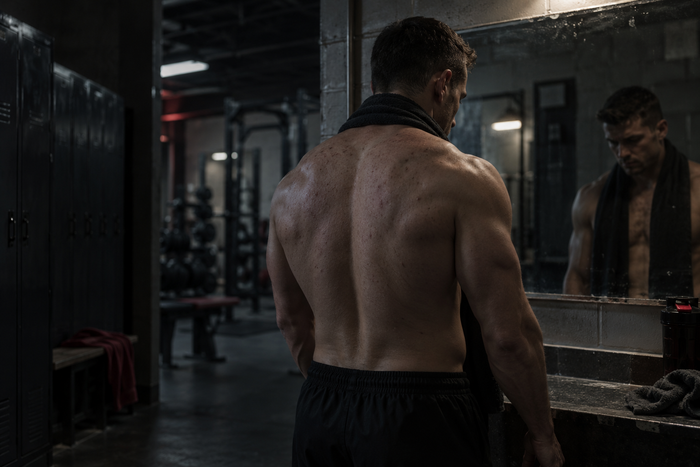
I still carry some residual fat around my back. There is still a little bit of jiggle, and I don’t walk around looking stage-ready.
But my abs are predominantly visible when I tense, I still look muscular and—most importantly to me—I am still strong.
That appears to be my sweet spot.
Someone else might feel their best at a much lower level of body fat. Another person might be happier carrying more body fat if it supports their strength, performance and lifestyle. There isn’t one perfect number that every person should chase.
The lowest body weight you can tolerate is not necessarily the body weight at which you will feel your best.
Intermittent Fasting Was My Ticket
The method that eventually helped me control the balance was intermittent fasting.
I generally begin eating at around 2 pm and finish at approximately 10 pm. That eating window suits my routine and makes it easier for me to control how much I consume without feeling as though I’m dieting every minute of the day.
Intermittent fasting isn’t magic. The eating window doesn’t somehow cancel the calories inside it, and it is still possible to gain weight while fasting if you eat enough.
For me, its value is practical.
Having a defined window reduces the number of opportunities I have to overeat. I can enjoy larger, more satisfying meals within that period while keeping my total intake under control. It gives me a structure I can maintain rather than another short-term diet I will eventually abandon.
That distinction matters. The best fat-loss method isn’t necessarily the most extreme or scientifically impressive one. It is the method that helps you consistently eat appropriately without making your life unbearable.
Leaner Isn’t Automatically Better
Losing nine stone taught me that fat loss can transform your health, confidence and life—but it also taught me that endlessly chasing a lower number can become its own trap.
There is a point where improving your body can turn into never allowing yourself to be satisfied with it.
I originally believed abs were the final destination. Then I got lighter and wanted more muscle. I became stronger and wanted to be leaner again. Every achievement created another condition I thought I needed to meet before I could be happy with my body.
My goal now is no longer to become as light or as lean as physically possible.
It is to maintain the balance that makes me feel like myself: muscular, strong, reasonably lean and capable of living normally.
I still want to improve. I still train hard, and I’m not pretending I have suddenly stopped caring about how I look. But I now understand that the “best” physique isn’t automatically the leanest person in the gym or the biggest person beside them.
It is the physique you can build, perform with and realistically maintain—without spending your entire life wishing it belonged to somebody else.
Comments
Leave a comment
Your email address will not be published. Comments may be reviewed before appearing.