
Cutting, Bulking, Keto, Carnivore or Fasting: Which Diet Actually Wins?
I've tried pretty much all of them.
I've cut calories until the first waves of fatigue started making everything feel harder. I've bulked and watched the scales go up while wondering how much of it was actually muscle. I've tried keto and dealt with the cramps and the strange adjustment that came with suddenly taking carbohydrates away.
I've fasted.
I've gone low-carb.
I've tried eating in ways that sounded brilliant on paper and then discovered that living with them was a completely different story.
And if you've spent enough time around gyms, you've probably heard someone passionately explain why their particular way of eating is the way to eat.
Carbs are bad.
Fat is bad.
Don't eat breakfast.
Only eat between certain hours.
Eat like a caveman.
Eat almost nothing but meat.
You can end up wondering how humanity survived before fitness influencers told us what time we were allowed to eat an egg.
So after trying different approaches myself, I think there's a much more useful question than asking which diet is theoretically perfect:
Which one actually works for your goal — and which one can you realistically live with?
Because those aren't always the same thing.
Before We Compare Diets, There's Something We Need to Get Straight
Diet names can make nutrition sound far more complicated than it needs to be.
Underneath most successful fat-loss approaches sits the same basic principle.
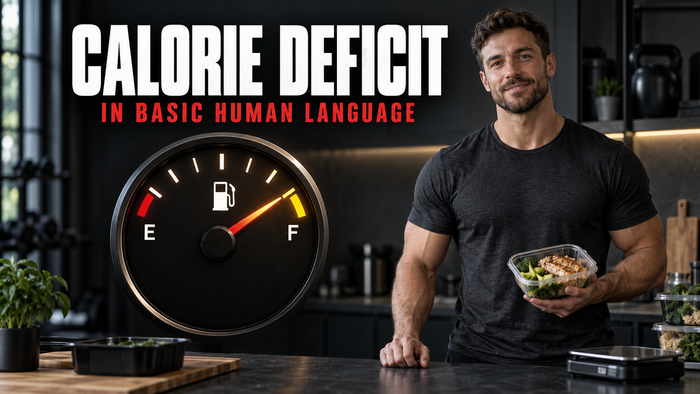
If you're consistently consuming less energy than your body is using, body weight tends to come down over time. That's a calorie deficit.[1]
If you're trying to gain muscle, the situation changes. You need enough energy to train, recover and support growth, alongside sufficient protein and appropriate resistance training.
The different diets we're about to discuss don't magically escape those principles.
They're mostly different methods of organising what, when and how much you eat.
And that's why two people can lose weight eating completely different diets.
One might eat carbohydrates at every meal. Another might follow keto. Someone else might skip breakfast and use intermittent fasting.
Different roads. Potentially the same destination.
Cutting: When Getting Lean Starts Getting Difficult
Anyone who has properly committed to a cut knows there's a difference between “I'm eating healthier” and actually dieting down.
At the beginning, I usually find it relatively straightforward. You've got motivation, you're watching what you eat, the scale starts moving and you begin seeing changes in the mirror.
Then comes the part Instagram transformations don't always show.
The fatigue.
For me, that's one of the first things I notice when a cut starts getting serious. Training can begin feeling heavier. Energy can drop. Hunger becomes more noticeable. Foods you normally wouldn't think twice about suddenly look incredible.
If you've spent years building muscle, the objective is normally to lose body fat while retaining as much muscle and performance as reasonably possible. Keeping resistance training in place and consuming adequate protein can help protect lean mass during dietary weight loss.[2]
I've learned that being more aggressive isn't automatically being more disciplined. Sometimes it's just making the diet harder than it needs to be.
My verdict: 5/5 for getting lean — provided the deficit is sensible.
Bulking: The Fun One... Until Your Abs Disappear
Then you've got the opposite end of the bodybuilding cycle.
The bulk.
When I first started thinking about gaining size, bulking sounded fantastic. You're deliberately eating more, training performance can improve and the scales going up is part of the plan.
What's not to like?
Quite a lot, potentially, if you take it too far.
There's an old-school mentality around bulking that basically amounts to: eat everything you can find and worry about the fat later.
I've never thought that makes much sense.
Your body's ability to build muscle isn't unlimited just because you've doubled your takeaway order. Once you've got enough energy available to support growth, continually increasing calories doesn't mean every additional pound magically becomes muscle.
That's why I much prefer a controlled bulk: eat enough to support progress, keep protein high enough, train hard, monitor your weight and adjust gradually.
My verdict: 5/5 for gaining size — but more food doesn't automatically mean more muscle.
Intermittent Fasting: Surprisingly Simple
Intermittent fasting is slightly different because it doesn't necessarily tell you what to eat. It tells you when to eat.
The popular 16:8 approach, for example, involves fasting for around 16 hours and eating within an eight-hour window.
I've tried fasting and I can understand why people love it. It's simple, and for somebody who isn't particularly hungry in the morning a defined eating window can make calorie control easier.
But there's something important here.
Fasting doesn't make calories stop existing.
A 2025 systematic review and network meta-analysis found intermittent-fasting strategies and continuous energy restriction produce broadly similar weight-loss and cardiometabolic outcomes overall. There are differences between specific fasting patterns, but fasting is not a universal fat-loss advantage simply because the eating window is shorter.[3]
For me, fasting is a tool. If it makes calorie control easier, brilliant. If it makes you miserable or wrecks your training, use something else.
My verdict: 4/5 if it fits your lifestyle. Much lower if you're miserable doing it.
Keto: Goodbye Carbohydrates
Keto was one of the more noticeable changes for me personally.
A ketogenic diet takes carbohydrate intake very low while dietary fat becomes the major energy source.
And when I dramatically reduced carbohydrates, I knew about it. The cramps were one of the things I remember.
Other people report headaches, tiredness or generally feeling rough during the early adjustment period, although experiences vary considerably.
Once adapted, some people absolutely love keto. They enjoy the foods available to them, like the strict rules and may find appetite easier to manage.
And keto can result in weight loss.
But here's the bit that matters: you don't have to enter ketosis to lose body fat.
A Cochrane review comparing low-carbohydrate and balanced-carbohydrate weight-reducing diets found little to no difference in weight loss at up to two years when both approaches were designed for weight reduction.[4]
For trained people, the performance picture is more nuanced than “keto kills strength.” A 2024 meta-analysis found no significant difference in one-repetition-maximum squat or bench strength between ketogenic and non-ketogenic diets in resistance-trained participants, while other systematic reviews have reported less favourable findings for some high-intensity and time-trial outcomes.[5][6]
So if keto helps you control intake and you enjoy it, fine. If you love carbohydrates, perform well with them and can control calories while eating them, there's no requirement to eliminate them.
My verdict: 3/5 for the average gym-goer. It can work brilliantly for some people, but it's not magic.
Carnivore: Can You Really Just Eat Meat?
Then we arrive at probably the most controversial diet on this list.
Carnivore.
The strict version is essentially animal foods with plant foods removed.
Meat. Eggs. Certain animal products. And that's pretty much your world.
I understand the attraction. It's incredibly simple, there's almost no decision-making and you're naturally eating plenty of protein.
But simplicity and nutritional completeness aren't automatically the same thing.
Removing fruit, vegetables, whole grains and legumes also removes major sources of fibre and a large amount of dietary variety.
The current evidence base for strict carnivore diets is also very limited compared with established dietary patterns. A 2026 scoping review concluded that the evidence was too sparse to establish long-term safety or benefits and highlighted potential concerns around nutrient adequacy and cardiovascular risk markers.[7]
That's enough for me to be cautious about it.
There's a difference between saying “This worked for me” and “Therefore everyone should eat this way.”
My verdict: 2/5 as a general recommendation. Interesting? Yes. Necessary? I haven't seen a convincing reason why.
Atkins: The Diet Everyone's Parents Seemed to Know
Before keto became the diet everyone argued about online, there was Atkins.
The Atkins diet became enormously popular by restricting carbohydrates, particularly during its initial phases, before gradually allowing more carbohydrate foods back into the diet.
Atkins can work. So can plenty of other approaches.
The best-quality evidence does not show that low-carbohydrate weight-reducing diets have a large long-term advantage over balanced-carbohydrate weight-reducing diets. The differences are generally small when both approaches produce an energy deficit.[4]
The question is whether restricting carbohydrates is something you actually need to do.
For me, it isn't.
My verdict: 3/5. It works for some people, but there are easier ways to achieve the same goal.
So Which Diet Actually Wins?
After trying different approaches, reading about them and spending years training, I've become considerably less interested in extreme diets.
Because there's a pattern.
Every few years something new becomes the answer.
Fat was the enemy. Then carbohydrates became the enemy. Then breakfast became unnecessary. Then eating frequently became unnecessary. Then plants became unnecessary.
Meanwhile, the boring fundamentals kept working.
Best Diet for Losing Fat
A sustainable calorie-controlled cut with adequate protein.
Create a manageable calorie deficit, consume sufficient protein, continue resistance training and give it time.[1][2]
Best Diet for Building Muscle
A controlled calorie surplus with adequate protein and hard resistance training.
You don't need a 5,000-calorie dirty bulk. Give your body enough energy and protein to support training and growth without turning gaining muscle into a competition to see how quickly you can increase the number on the scales.
Best Diet Overall
The sensible diet you can actually stick to.
I'd rather have someone follow a very good nutrition plan for nine months than a supposedly optimal plan for nine days.
What I've Learned From Trying Them
Experimenting with different diets has taught me something I probably wouldn't have understood simply from reading about them.
Knowing how a diet works and knowing what it feels like to live on that diet are completely different things.
A calorie deficit sounds simple until you're several weeks into one and you're tired and hungry. Keto sounds straightforward until you're standing in a supermarket checking carbohydrates in foods you never previously thought about. Fasting sounds effortless until someone puts breakfast in front of you after you've trained. Bulking sounds fantastic until you realise gaining weight isn't automatically the same thing as gaining quality muscle.
That's why I don't think there's one diet that rules them all.
There's a goal. There's a method. And then there's the person who actually has to live with that method.
Those three things need to work together.
Keto isn't magic. Fasting isn't magic. Carbohydrates aren't the enemy. And eating nothing but steak doesn't unlock a secret metabolic cheat code.
Most of us probably don't need another extreme diet.
We need to understand what we're trying to achieve, eat appropriately for that goal, train consistently and keep doing it for long enough to see the result.
Because after trying plenty of different approaches myself, there's still one thing I haven't found a diet capable of beating.
Consistency is undefeated.
Research & Sources
- NHS — Calorie counting and weight loss.
- Resistance exercise during dietary weight loss. Systematic review and meta-analysis, 2025.
- Intermittent fasting strategies and cardiometabolic outcomes. Systematic review and network meta-analysis, 2025.
- Low-carbohydrate versus balanced-carbohydrate diets for reducing weight and cardiovascular risk. Cochrane systematic review, 2022.
- Effects of the ketogenic diet on strength performance in trained men and women. Systematic review and meta-analysis, 2024.
- Effects of the ketogenic diet on performance and body composition in athletes and trained adults. Systematic review and meta-analysis.
- Carnivore diet: a scoping review of the evidence. 2026.
Comments
Leave a comment
Your email address will not be published. Comments may be reviewed before appearing.