
The 3-Week Training Split Someone Taught Me — And Why I've Never Forgotten It
Most training programmes seem to be built around seven days.
Monday comes around and it's chest.
Tuesday is back.
Wednesday is shoulders.
Thursday is legs.
Friday you finish whatever you've got left.
Then you have the weekend off and on Monday morning you start the whole thing again.
There's nothing necessarily wrong with that.
But someone once explained a different way of training to me, and I've never really forgotten it.
The exercises didn't constantly change. The training days didn't change. Even the body parts stayed pretty much exactly where they were.
What changed was what you were asking your body to do with those exercises.
Week one was about strength.
Week two was about volume.
Week three was about backing off, getting a pump and recovering.
Then you returned to the beginning, added a little weight and started the entire process again.
It was ridiculously simple.
And there is a legitimate training principle behind deliberately changing volume and intensity over time. Periodised resistance training has shown an advantage for maximal-strength development over non-periodised training when volume is matched, although hypertrophy outcomes do not appear clearly superior simply because a programme is periodised.[1]
That doesn't prove this exact three-week routine is optimal. It just means the underlying idea of planned variation is not nonsense.
The Basic 3-Week Training Split
| Day | Training |
|---|---|
| Monday | Chest |
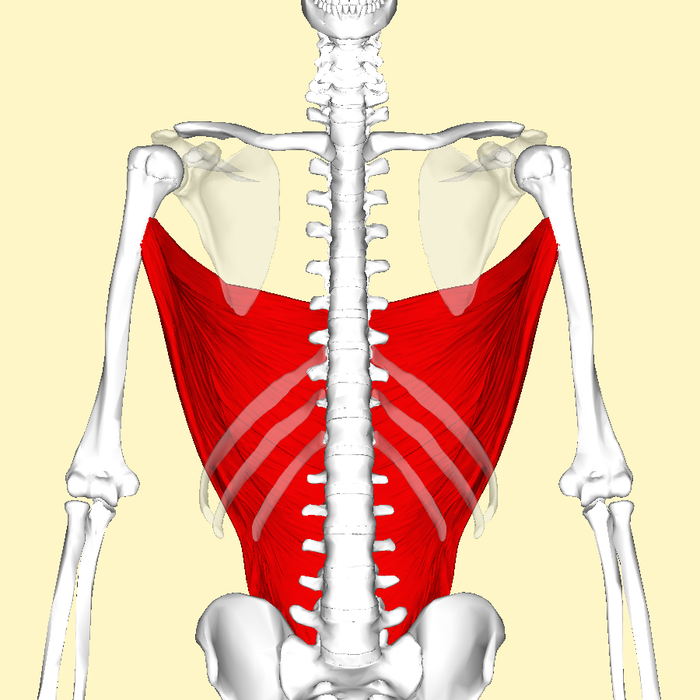
| Tuesday | Back |
| Wednesday | Shoulders & Abs |
| Thursday | Legs |
| Friday | Arms, Traps & Calves |
| Saturday | Rest |
| Sunday | Rest |
Nothing particularly revolutionary there. It's essentially a traditional five-day body-part split.
The interesting part is what happens across the three weeks.
Week 1 — Strength
Heavy. Lower repetitions. The main focus was 5 sets of 5 reps.
Week 2 — Volume
Same days. Same muscles. Same exercises.
But the weight comes down significantly — roughly around 60% of maximum was how it was originally explained to me — and the emphasis switches towards higher repetitions, muscular fatigue and hard working sets.
Week 3 — Pump and Recovery
Again, the exercises stay the same.
But now you're deliberately backing away from failure. Lighter weights. Controlled repetitions. Get the muscles moving, get a pump and allow some of the fatigue you've accumulated to come down.
Then you return to Week 1, add a small amount of weight where appropriate and go again.
Strength. Volume. Recovery. Progress. Repeat.
That was the system.
Week One: Strength
The first week is probably the easiest to understand.
You're trying to get stronger.
The system I was shown used 5 × 5 as the foundation.
Five sets. Five reps.
Heavy enough that the work is challenging, but not so heavy that every set becomes an ugly fight just to move the weight.
How often you train also matters, particularly when you're trying to balance useful work with enough recovery.
Take chest day as an example. You might have bench press, incline press, chest press and another established chest movement.
Whatever exercises you choose, the important part of this particular system is that you keep them consistent.
That gives you something incredibly useful: a comparison.
If I performed an exercise at a certain weight during the previous strength cycle, I know exactly what I'm trying to improve when I return to it.
And that brings us to progressive overload.
Why Adding 1.25 kg Matters
When this programme was explained to me, the progression was simple.
Complete the three-week cycle. Come back to your strength week. Then add 1.25 kg to the exercises you'd successfully become accustomed to.
It doesn't sound like much. And that's precisely why I like the idea.
People sometimes think progressive overload means adding huge amounts of weight as quickly as possible. It doesn't.
Progressive overload is about gradually increasing the training demand over time, and adding load is only one way of doing that.[2]
Small improvements repeated for long enough can become meaningful improvements.
That doesn't mean you should blindly add weight every three weeks regardless of what happened during the previous cycle.
If your technique deteriorated, you couldn't complete the prescribed work or the weight simply isn't ready to increase, forcing another 1.25 kg onto the bar isn't progression. It's just adding weight.
Progression has to be earned.
Week Two: Volume
This is where the programme completely changes personality.
You walk into the same gym. You perform the same exercises. You train the same body parts.
But instead of trying to move heavy weight for sets of five, you're now trying to make the muscles work.
The original recommendation I was given was approximately 60% of maximum, with the majority of working sets pushed extremely hard and often towards failure.
That 60% figure is how the routine was taught to me, not a universal evidence-based prescription.
And believe me, lighter doesn't necessarily mean easier.
Anyone who has taken a moderate weight through a long set knows exactly what I'm talking about.
Do You Need to Take Everything to Failure?
This is one part of the original system where I'd add some caution.
When it was explained to me, failure was a major part of the volume week.
And there's definitely a place for training extremely hard.
But I don't think that means every working set of every exercise needs to become an absolute war.
Research comparing resistance training to repetition failure with non-failure training does not show a consistent hypertrophy or strength advantage from taking every set to complete failure, particularly when training volume is accounted for.[3]
Failure creates fatigue as well as stimulus.
And remember what this programme looks like: Monday through Friday, five consecutive training days.
If you're annihilating every exercise to complete muscular failure, fatigue can accumulate quickly.
A more sensible interpretation for many lifters would be to take plenty of working sets hard and selectively take appropriate exercises further rather than making absolute failure compulsory.
Train hard. But train intelligently.
Why Does the Volume Weight Increase Too?
Here's another part of the system I liked.
Imagine your strength numbers gradually increase. Your maximum strength has now moved upwards.
If your volume work is being calculated relative to your strength, the load used during volume week naturally begins moving upwards too.
So you're not simply progressing one week. The entire cycle gradually moves forward.
Week Three: The Week Most People Would Struggle With
Then comes the light week.
Psychologically, I actually think this might be the hardest week for some gym-goers because we're terrible at backing off.
You walk into the gym. You've got energy. There's weight sitting there. And your brain tells you: go heavier.
But that's not what this week is for.
The third week was explained to me almost as a pump week.
Use the same movements. Keep the muscles working. Get a pump. But don't chase failure, grind repetitions or try to prove anything.
In modern programming language, it has similarities to a fatigue-management or deload week, although exactly how much of a deload it becomes depends on how much load and volume you actually reduce.
The important idea is simple: not every session has to destroy you to contribute to progress.
The Power of Keeping the Exercises the Same
People love changing exercises. A new machine appears and suddenly the programme changes. They see an exercise online and that gets added. Something else gets removed.
There can absolutely be reasons to change movements.
But constantly changing everything makes progression harder to compare.
This three-week system does almost the opposite. It says: keep the movements, change the stimulus.
What I Like About This Training Split
1. It's easy to understand. Heavy. Volume. Light. Repeat.
2. Progress is measurable. Because the exercises remain consistent, you can see whether you're getting stronger.
3. You're not training the same way constantly. Heavy low-repetition work feels completely different from higher-volume work.
4. Recovery is part of the programme. Backing off isn't something you do because you've failed. It's part of the plan.
5. It stops you chasing weight every single week.
Where I Think the Programme Has Weaknesses
I like this system. That doesn't mean I think it's perfect.
The first obvious issue is training five consecutive days. Some people will recover perfectly well from that structure. Others won't.
There's also the question of muscle-training frequency. This traditional body-part split generally gives each major muscle group one dedicated session per week.
More frequent training can be a practical way to distribute weekly volume, but frequency itself does not appear to have a large independent effect on hypertrophy when weekly volume is matched.[4]
And then there's failure training. As I've already mentioned, I'd be more selective about taking exercises to absolute failure than the original version I was taught.
The concept is good. Destroying yourself simply because the calendar says “volume week” isn't.
Who Could This Work For?
I wouldn't hand this programme to somebody walking into a gym for the first time.
Beginners need to learn movements, develop good technique and establish consistency before worrying about complicated loading cycles.
But for someone with some training experience who feels like they've been doing the same thing every week, I think it's genuinely interesting — particularly if you enjoy both heavy training and higher-volume bodybuilding-style work.
Would I Follow It Exactly Today?
Probably not.
Training knowledge evolves. Your body changes. Your experience changes.
I'd potentially adjust the five-consecutive-day structure. I'd be more selective with failure. I wouldn't automatically add 1.25 kg to every exercise simply because three weeks had passed. And I'd consider whether certain muscle groups would benefit from having their weekly volume distributed differently.
But the principle behind the programme?
That's the part I've never forgotten.
Keep enough things consistent that you can measure progress. Change the training stimulus deliberately. Train heavy. Accumulate volume. Manage fatigue. Then try to improve.
The Lesson Someone Taught Me Without Realising It
When I was first shown this split, I thought I was being shown a workout programme.
Looking back, I think I was actually being taught something much more useful.
Training doesn't have to exist in seven-day boxes.
Your body doesn't reset because Monday appears on the calendar. Progress happens over months and years.
You don't have to copy this programme exactly. You might hate body-part splits. You might prefer upper/lower. You might train three days per week.
That's fine.
But there's an idea here worth taking away.
Stop thinking about every workout as an isolated event. Think about what today's training is preparing you to do tomorrow, and what this week's training is preparing you to do three weeks from now.
Because the objective isn't to win today's workout.
It's to become stronger over time.
The system someone showed me was simple:
Strength. Volume. Recovery. Add a little weight. Go again.
Years later, I still think there's something very clever about that.
Research & Sources
- Moesgaard L, et al. — Effects of periodization on strength and muscle hypertrophy in volume-equated resistance training programs. Systematic review and meta-analysis, 2022.
- American College of Sports Medicine — Resistance Training Prescription for Muscle Function, Hypertrophy, and Physical Performance in Healthy Adults. Position stand, 2026.
- Grgic J, et al. — Resistance training performed to repetition failure or non-failure. Systematic review and meta-analysis.
- Schoenfeld BJ, et al. — Effects of resistance training frequency on measures of muscle hypertrophy. Systematic review and meta-analysis.


Comments
Leave a comment
Your email address will not be published. Comments may be reviewed before appearing.