
I wasn’t strong when I started training.
I was in that awkward beginner phase where I spent most of my time standing around with my hands in my pockets until my training partner said, “Your turn.”
I remember sitting near the dumbbell benches and watching a bloke press the 22 kg dumbbells. I turned to my training partner and said, “I’ll do that one day.”
That should give you some idea of the weights I was using at the time.
My training partner firmly believed in compound movements, and he taught me almost everything I knew during those early years. I still thank him for that now. He has since developed blindness and no longer trains, but he always tells me I was the best person he ever trained with.
Coming from him, that is a massive compliment.
But I digress.
This is the story of how I went from being impressed by someone pressing 22 kg dumbbells to benching 165 kg regularly and occasionally hitting 170 kg.
It wasn’t quick, and it certainly wasn’t easy.
My First Year Made Strength Look Easy
I probably started with around 10 kg on each side of the bar—roughly a 40 kg bench press altogether.
During my first year, my strength increased rapidly. I went from approximately 40 kg to somewhere near 100 kg.
That kind of progress isn’t unheard of when you are new. People call it “newbie gains” for a reason. Your body is adapting to training, your technique is improving and almost everything you do provides a new stimulus. Anyone at that starting point may also find the broader beginner’s guide to building muscle useful.
It felt as though I could press more weight every week.
That visible progress is probably one of the main reasons I stayed so committed during that first year. Every time I walked into the gym, there was a realistic chance I would achieve something I couldn’t do the week before.
Then I hit my first plateau.
The rapid progress stopped. Suddenly, I couldn’t simply add weight to the bar and expect it to move.
That was when I realised that getting genuinely strong was going to require more than repeating the same routine forever.
I needed to experiment, learn and remain committed even when the numbers weren’t moving.
I had decided that I was going to become strong.
My Squat and Deadlift Progressed More Easily
I have already written about some of the different training styles I’ve tried, including traditional bro splits and Starting Strength-style 5×5 training.
What I haven’t properly explained is how specific the bench press became for me.
My squat and deadlift numbers seemed to rise relatively easily. I’m short, naturally stocky and had spent years carrying a lot of body weight. I believe those factors helped me develop a decent base for moving heavy loads, particularly through my legs and back.
But the bench press was a different animal.
It always felt like my weakest major lift. The progress was slower, the plateaus were longer and small technical mistakes made a noticeable difference.
I couldn’t just attack it and assume it would improve. I had to study it.
The Bro-Split Phase
During my bro-split phase, training was about fatigue, soreness and trying to shape individual muscles.
This was the period when I genuinely had to sit and stretch properly. The discomfort from those stretches could be ridiculous. I remember sitting at work feeling as though the muscle was ripping whenever I tried to open my chest.
The sessions were hard, and I was certainly doing plenty of work, but more fatigue didn’t automatically translate into a stronger bench press.
The bro split helped me build muscle and understand what different movements felt like, but it wasn’t the final answer to increasing my bench.
The 5×5 Era Broke My First Plateau
Moving into 5×5 training changed the emphasis.
Instead of constantly chasing soreness and exhausting individual muscles, I repeatedly practised the major compound lifts while gradually trying to increase the load.
That period probably did more than anything else to break my first major plateau.
It gave me structure. It made progression measurable, and it forced me to become more comfortable handling heavier weight rather than only chasing a pump.
I didn’t love every part of 5×5 training, but it taught me something important: if you want to become better at a movement, you need to practise that movement consistently.
Every Bench-Press Method I Tried
Once the easy progress disappeared, I started reading about and testing almost every bench-press method I could find.
I benched with bands and chains when they were available. Because the resistance increases as the bar rises, these methods made the lockout progressively harder.
I used a block on my chest and pressed from that shortened range. This allowed me to overload particular portions of the lift and work on areas where I was getting stuck.
I performed touch-and-go repetitions. I used slow negatives followed by fast presses. I lowered weights heavier than I could press normally and had a spotter help return the bar.
Those heavier negatives are an advanced method, not something to attempt casually. They should only be used with properly positioned rack safeties and experienced spotters; a beginner should never lower more weight than they can safely control.
Some methods helped more than others. Some probably helped because they addressed a genuine weakness. Others may simply have worked because they made training feel new again and forced me to concentrate.
However, none of them were magic.
They were tools, not shortcuts.
The Bench Press Isn’t Just About Your Chest
I also began paying much more attention to everything involved in a strong bench press.
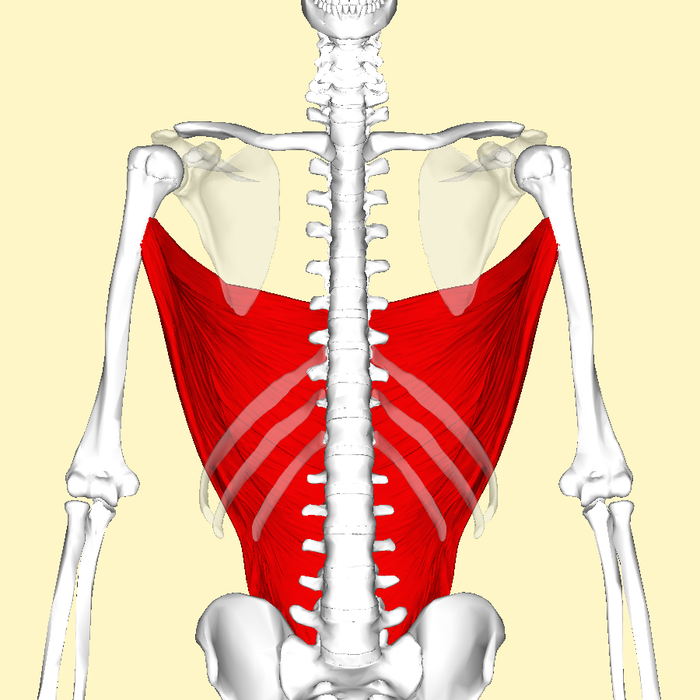
The chest, triceps and front delts are the main muscles producing the press, but the rest of your body still matters. Your upper back provides a stable platform. Your lats can help you control the descent and maintain position. Your legs and torso help create full-body tension.
I practised bracing, maintaining my upper-back position and using leg drive rather than lying loosely on the bench and hoping my chest would do everything.
A heavy bench press is still a press, but it should feel as though your entire body is organised underneath the bar.
If your legs are moving randomly, your upper back is unstable and your body loses tension as the bar touches your chest, you are making an already difficult lift even harder.
Finding My Bar Path
I studied my bench-press form religiously.
For me, the bar comes down under control and touches around the lower chest, just below the nipple line. From there, I press through the path that feels strongest and most repeatable for my build.
I used to think the perfect path must always be completely straight because that appeared to be the shortest distance. But the shortest route is not automatically the strongest route for every lifter.
Many successful lifters press slightly backwards towards the shoulders as the bar rises. Grip width, arm length, touch point and individual structure all affect the strongest path.
The important part is finding a safe, controlled and repeatable path—not blindly copying the exact movement of the strongest person sitting beside you. The same individual differences are why questions such as free weights versus machines rarely have one universal answer.
At the bottom, I feel the controlled stretch through my chest before driving the bar away. The best way I can describe it is like stretching an elastic band: once stretched, it wants to return to its original position.
That is how the bottom of a strong press feels to me.
My Ten-Year Bench-Press Progression
These are my approximate best bench numbers across ten years:
| Year | Bench press |
|---|---|
| Year 1 | 40 kg to 100 kg |
| Year 2 | 110 kg consistently |
| Year 3 | 120 kg |
| Year 4 | 140 kg |
| Year 5 | 140 kg |
| Year 6 | 145 kg |
| Year 7 | 150 kg |
| Year 8 | 155 kg |
| Year 9 | 160 kg |
| Year 10 | 170 kg |
Look closely at those numbers.
It took me roughly one year to add the first 60 kg. It then took another nine years to add the next 70 kg.
There were months—and sometimes entire years—when I appeared to be stuck on the same weight. I would finally break through, reach the next number and then become stuck all over again. If that sounds familiar, there are several possible reasons why someone may be not making progress in the gym.
I have now been around 170 kg for approximately a year.
Some weeks I hit it. Some weeks I fail it. Some weeks I think, “Fucking hell, I can’t even touch 150 today.”
Then another week arrives when I feel properly strong and can press weights that felt impossible days earlier.
Strength is not perfectly linear. Your sleep, food, fatigue, recovery, technique and confidence can all affect what happens under the bar that day.
A personal best proves what you have achieved. It doesn’t guarantee that you can reproduce it whenever you want.
My Target Was Actually 200 kg
In complete honesty, 170 kg wasn’t my final target.
I wanted to bench 200 kg by the end of last year.
I didn’t achieve it.
You won’t hit every target according to the deadline you originally imagined. That doesn’t mean you throw the entire goal away. Sometimes you move the date further down the road and continue working.
I still want that 200 kg bench.
Whether I eventually reach it or not, the target gives me somewhere to aim. But ten years of lifting has taught me to respect the distance between wanting a number and earning it.
The Fancy Methods Weren’t the Real Secret
After trying different programmes, bands, chains, blocks, slow negatives, overloaded eccentrics and countless accessory movements, I realised something.
None of those methods was the main reason I reached 170 kg.
They all helped. Improving weak areas matters, and without changing something during a plateau, you may remain stuck.
But the biggest factor was consistency.
Consistently testing a method for long enough to discover whether it worked.
Consistently practising my bar path and technique.
Consistently training the muscles involved in a strong press.
Consistently eating enough food to fuel my training—including understanding how much protein supports muscle growth.
Consistently getting underneath the bar and trying to become stronger.
The clever techniques only mattered because I continued showing up long enough for them to matter.
Stop Comparing Your Bench With Someone Else’s
My biggest advice for a beginner will always be this: don’t compare yourself with the biggest person sitting beside you.
Don’t assume the way they bench will automatically work for you. Their build, experience, goals, injuries and leverages may be completely different from yours.
Choose a method that is safe, trains the movement properly and allows you to track your own progress.
It doesn’t matter if you are in Year 5 and benching 90 kg.
It doesn’t matter if a 22-year-old beside you is pressing 150 kg for repetitions.
Genetics play a part in strength. Body weight, structure, muscle mass and training history all matter. Pretending everybody has identical potential would be dishonest.
But you cannot control somebody else’s genetics, and you cannot build your own strength by staring at their bar.
You can control whether you train consistently. You can study your technique, address your weak points, eat appropriately, recover and return the following week.
My main tip for reaching a 170 kg bench is therefore not a secret exercise or perfect programme.
Set the goal. Accept that it may take far longer than you expected. Then keep getting underneath the bar.
That is what actually made me stronger.

Comments
Leave a comment
Your email address will not be published. Comments may be reviewed before appearing.