
I've followed some questionable training ideas over the years, but there's one that comfortably wins. For roughly a month, I went into the gym almost every day and spent around an hour performing the same Olympic lift: the snatch.
That was basically my training programme. I'm not exaggerating either. I'd spend most of the session practising the snatch, usually add some lat pulldowns and front squats, and then come back the following day and do pretty much the same thing again.
Looking back now, it sounds ridiculous. At the time, though, I genuinely thought I was being dedicated.
The strange thing is that it worked. In fact, it worked incredibly well, at least if the only thing we're measuring is the number on the bar. When I started, my snatch was around 50 kg. Within roughly a month, I'd managed to get it up to 90 kg.
That's a 40 kg increase in around four weeks, so you can probably understand why I kept going. Every time something started hurting, I could look at the weight I was lifting and convince myself that whatever I was doing was obviously working.
By the end of that month, however, I'd injured the area around my biceps/front shoulder badly enough that I could barely use my arm properly. Normal training disappeared for weeks. I spent a ridiculous amount of time sitting on the settee watching television, and when I eventually returned to the gym, a bench press that had previously been around 140 kg was suddenly closer to 60 kg.
It took me roughly six months of consistent training before I felt remotely close to where I'd been before the injury.
So yes, I got my 90 kg snatch.
But was it worth it?
It Started With Watching Olympic Weightlifting
I can't remember exactly what competition I was watching. It was around 2019 or 2020, and I'd been watching Olympic-style weightlifting when I properly noticed the snatch.
If you've never watched somebody who's genuinely good at Olympic lifting, it's an incredible movement. The bar starts on the floor and then, almost instantly, they've accelerated it upwards, dropped underneath it and somehow ended up standing there with a huge amount of weight locked overhead.
There's strength involved, obviously, but also speed, mobility, timing, coordination and power. I became completely fascinated by it.
I wanted to learn it, and more specifically, I wanted a big snatch.
So I approached learning it using the flawless scientific methodology of an impatient bloke in a gym: if practising the movement was good, then practising it constantly must be even better.
That was probably my first mistake.
My Brilliant Training Programme
Calling what I was doing a training programme might actually be generous.
The snatch became my main movement, and I'd practise it for roughly an hour nearly every day. I wasn't using maximal weights for the entire hour because I was still learning the movement. A lot of the work involved moderate loads and repeated attempts, and I think that's partly why I convinced myself it wasn't particularly risky.
In my head, I wasn't attempting huge one-rep maximums every few minutes. I was just practising.
The problem was that I was practising again, and again, and again, then returning the next day and doing exactly the same thing.
I'd normally add some lat pulldowns and front squats as well, but almost everything revolved around improving the snatch.
At the time, I thought there was logic behind it. Olympic weightlifters practise Olympic lifts frequently. I wanted to become better at an Olympic lift. Therefore, I should practise it frequently.
What I hadn't really considered was that I wasn't an Olympic weightlifter. I didn't have years of technical development behind me, I didn't have a professionally managed training programme, and I didn't have an experienced weightlifting coach watching every repetition.
Most importantly, my body wasn't adapted to suddenly performing a technical, explosive movement for an hour almost every day.
Looking back, it was almost the complete opposite of a structured programme where strength, volume and recovery are deliberately managed over time.
I was trying to force adaptation to happen as quickly as my motivation wanted it to happen.
My body eventually had other ideas.
The Problem Was That It Actually Worked
This is the part I find most interesting looking back.
If the routine had produced absolutely no results, I'd probably have stopped.
But the results were ridiculous.
I started with a snatch of around 50 kg, and the number kept climbing. Eventually I managed 90 kg. In approximately four weeks I'd added around 40 kg to a movement I'd only recently started properly practising.
When you're experiencing progress that quickly, it's incredibly easy to believe you've discovered something special.
Maybe training it every day really was the answer. Maybe everyone talking about recovery was being overly cautious. Maybe I was simply willing to work harder.
The problem was that I was only measuring one thing: the weight on the bar.
I wasn't measuring how stiff my upper back was becoming. I wasn't measuring how beaten up my lats felt. I wasn't measuring the discomfort beginning to develop around my shoulder.
I was tracking how much weight I could snatch, but I wasn't tracking what getting that weight onto the bar was costing me.
Week One: My Upper Back Started Complaining
The first warning came fairly quickly. After around the first week, my upper back seemed to be constantly stiff.
It wasn't enough to make me stop training, and that's probably why I ignored it. I just assumed it was part of learning a new movement and training hard.
Looking back, that was the first opportunity I had to question what I was doing.
Instead, I interpreted the stiffness as evidence that I'd worked hard.
That's an easy trap to fall into when you're motivated. Soreness becomes proof you've trained properly. Fatigue becomes proof you're dedicated. Eventually, even discomfort can start being treated as something you're supposed to push through.
So that's exactly what I did.
I carried on.
Then My Lats Took a Beating
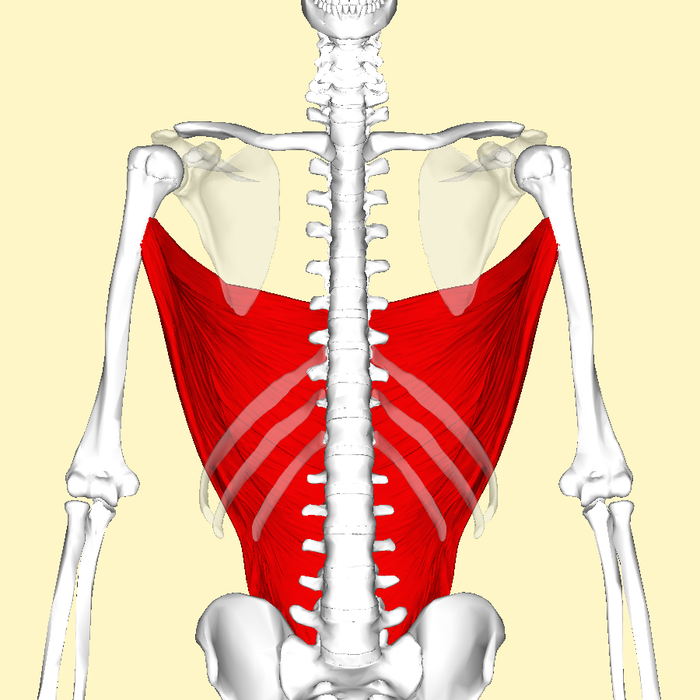
The next thing I noticed was my lats. They constantly felt like they were taking a hammering, which really shouldn't have surprised me.
I was repeatedly performing an explosive pulling movement, trying to stabilise weight overhead, adding lat pulldowns on top, and then returning the following day to repeat the process.
There wasn't really a point where the accumulated fatigue was getting an opportunity to disappear.
I was treating recovery as time I wasn't training, rather than part of the process that actually allows training to work.
But again, the numbers were still improving.
Every new personal best gave me another reason to ignore what my body was telling me.
So I carried on.
Week Three: My Shoulder Started Hurting
By around the third week, I started genuinely feeling discomfort around the front of my shoulder and front delt area.
This should have been the point where I stopped and reassessed everything.
By then I'd already had persistent upper-back stiffness, my lats constantly felt beaten up, and now another area was beginning to hurt.
Instead, I ploughed through it.
I think there's an important distinction here because the mentality of pushing through discomfort can be useful in the gym. Hard training isn't supposed to feel easy. Muscles burn, cardio becomes uncomfortable and heavy sets require effort.
But there's a difference between something being difficult and persistent or worsening joint or shoulder pain. NHS guidance advises avoiding activities that make shoulder pain worse and getting medical help if pain is worsening, very difficult to move or does not begin improving.[1]
I didn't respect that distinction particularly well at the time.
Or perhaps I did understand it and simply didn't want to listen.
Either way, I continued.
Week Four: Eventually Something Gave
By around the fourth week, my body finally made the decision for me.
I injured the area around my biceps tendon/front shoulder. Thankfully, I didn't suffer a complete tendon rupture, but the injury was significant enough that using my arm normally became extremely difficult.
Suddenly, the person who'd been training nearly every day couldn't train properly at all.
I'd gone from obsessing over getting my snatch from 50 kg to 90 kg to sitting on the settee unable to do much with the arm I'd been abusing for the previous month.
And this is where the true cost of that 90 kg lift started becoming apparent.
From Training Every Day to Sitting on the Setee
Training has always been a massive part of my life, so suddenly having it taken away affected me far more than I expected.
For around a month, I could barely use the arm properly. Instead of going to the gym every day, I spent a lot of time sitting on the settee watching television and feeling pretty miserable about the situation I'd created for myself.
That period eventually stretched into roughly two months where anything resembling my normal training routine had essentially disappeared.
That's the irony I still think about.
I'd become so obsessed with accelerating my progress that I'd eventually removed my ability to progress at all.
Going Back to the Gym Was Humbling
When I eventually returned to training, I realised just how much the whole experience had cost me.
Before the injury, I had been bench pressing around 140 kg. When I came back, I was somewhere around 60 kg.
Now, I don't believe every kilogram of that difference represented physical strength I'd permanently lost. There was definitely a psychological element to it as well.
When you've injured yourself badly enough that you've spent weeks unable to train normally, heavy weights suddenly feel different. You're waiting for something to hurt. You're wondering whether the same thing is about to happen again, and you become hesitant about pushing yourself.
Whatever the exact combination of detraining and confidence was, the result was the same. A weight that would previously have been nowhere near my maximum suddenly felt significant.
It was incredibly humbling.
And it took roughly six months of consistent training before I felt remotely close to where I'd been before the injury.
So Was Going From 50 kg to 90 kg Actually Progress?
This is probably the biggest question the experience left me with.
If you only look at the first month, the programme looks unbelievably successful.
I nearly doubled my snatch.
If I'd posted a transformation video showing 50 kg in week one and 90 kg in week four, somebody watching it might reasonably have thought I'd discovered an incredible way to improve the lift.
But then include the next six months in that video.
Suddenly the story looks very different.
I gained 40 kg on one lift, injured myself, lost the ability to train normally, watched my other lifts collapse and then spent months trying to get back to where I'd started.
Was the 40 kg increase real progress?
In one sense, absolutely.
I became dramatically better at the movement.
But was it sustainable progress?
Clearly not.
That's something I wish I'd understood earlier. A training programme can produce results and still be a terrible programme for you.
Sometimes that's actually what makes a bad programme dangerous. If something produces no results whatsoever, you'll probably stop doing it.
When something produces incredible short-term results while simultaneously beating your body into the ground, it's much harder to walk away.
Every personal best gives you another reason to continue.
Moderate Weight Doesn't Mean Moderate Stress
Another mistake I made was assuming that because I wasn't constantly using maximal weights, what I was doing wasn't particularly extreme.
But the weight on the bar is only one part of training stress.
Frequency matters. Volume matters. Technique matters. Exercise complexity matters. Recovery matters.
And repetition matters.
A moderate load performed occasionally is one thing. A moderate load repeated over and over for an hour, then repeated the next day, then the next day, while you're still learning how to perform the movement properly, is something completely different.
I was focusing on intensity while ignoring almost everything else.
Was Training the Snatch Every Day Automatically Stupid?
I think this distinction matters.
High-frequency practice itself isn't automatically wrong.
How often you should train depends on far more than simply how motivated you are, particularly when volume, intensity and recovery are taken into account.
Experienced Olympic weightlifters can practise their competition movements very frequently. Technical movements require repetition, and advanced athletes can tolerate workloads that would completely bury someone who hasn't built up to them.
The problem wasn't simply that I trained the snatch frequently.
The problem was how I did it.
I was relatively new to the movement. I dramatically increased my exposure to it. I performed long sessions. I wasn't intelligently managing fatigue, and when warning signs started appearing, I didn't change anything.
So the lesson isn't that nobody should ever practise the snatch frequently.
The lesson is that you shouldn't copy the visible training habits of advanced athletes while ignoring everything that allows those athletes to tolerate that training.
Pain Isn't a Badge of Honour
This is probably the most important thing the whole experience taught me.
There are sensations in training that you sometimes have to tolerate.
Muscles burn. Hard cardio is uncomfortable. Heavy sets are difficult. Being tired isn't automatically a reason to abandon a workout.
Persistent or worsening pain is different.
My upper back became constantly stiff. Then my lats felt destroyed. Then my shoulder started hurting.
I had multiple opportunities to change what I was doing.
I could have taken some time off. I could have reduced the volume. I could have found someone experienced to look at my technique. I could have changed the programme or sought professional advice when the discomfort continued.
Instead, I just kept training.
Eventually I didn't get to choose whether I was taking a rest day anymore.
My body chose for me.
What I'd Do Differently Now
If I decided to properly learn the snatch again today, I'd approach it completely differently.
I'd prioritise technique over load and seriously consider getting coaching from someone who actually understands Olympic weightlifting. I'd perform fewer quality repetitions rather than spending an hour repeating the movement simply because I thought more automatically meant better.
I'd also continue training the rest of my body sensibly instead of allowing one movement to consume almost my entire routine.
I'd also pay much more attention to the things happening outside the session, including sleep, recovery and getting enough protein to support my training.
Most importantly, I'd programme recovery from the beginning.
And if my shoulder started persistently hurting again, I'd listen.
Because I've already discovered what happens when I don't.
The Stupidest Programme Taught Me One of My Best Training Lessons
Would I recommend spending a month doing what I did?
Absolutely not.
But strangely, I don't think the experience was completely useless either.
It taught me something I've remembered ever since.
There's a difference between training hard and training recklessly. There's a difference between the discomfort that comes from working hard and the warning signs that something isn't right. There's a difference between practising a movement and endlessly repeating it because you're obsessed with seeing the number increase.
And there's definitely a difference between the programme of an experienced Olympic weightlifter and something you've invented because you watched weightlifting on television and suddenly decided you wanted a massive snatch.
I wanted to progress faster, and for four weeks I did.
50 kg became 90 kg.
Then I paid for those four weeks with months of trying to get back to where I'd been.
That's why, looking back, I don't think the biggest lesson was about the snatch at all.
It was about understanding what progress actually means.
The fastest possible improvement today isn't much use if the way you're achieving it prevents you from training tomorrow.
Sometimes the workout that teaches you the most isn't the one that makes you stronger.
It's the one that teaches you how not to train.
Research & Sources
- NHS — Shoulder pain. Guidance on avoiding aggravating activity and when persistent, worsening or severe shoulder symptoms need medical assessment.

Comments
Leave a comment
Your email address will not be published. Comments may be reviewed before appearing.