
I’ve been training for years, and when I actually sit down and think about it, I’ve trained in quite a few different ways.
Bro splits, 5x5, Olympic lifting, bodybuilding, push pull legs, training purely for aesthetics and now training twice a day.
The funny thing is that after trying all of that, I’ve basically ended up back where I started. I still train a bro split: chest and triceps, back and biceps, shoulders and abs, then legs. The difference is that the way I train it now is completely different from the way I was originally taught.
How I Was Taught to Train
When I first properly learned to train, there wasn’t much thought about optimising every set, tracking RPE or worrying about whether I had two reps left in reserve. The mentality was much simpler: train the muscle until it’s fucked.
Chest and triceps was a perfect example. I’d start with heavy bench press, then move onto dumbbells. I’d start with the bench inclined, do three sets of around 8–10 reps, drop the back support down one pin and repeat. Then another pin, then another, eventually working all the way down to a flat dumbbell press.
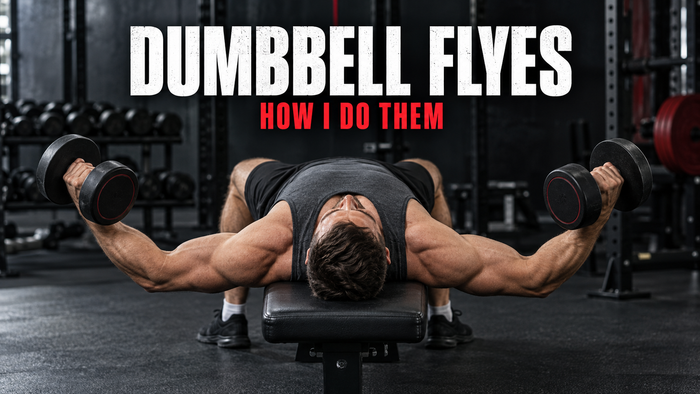
After pressing I’d move onto flyes and work through different bench angles again. By the time that was finished, my chest was completely fatigued. Only then would I start triceps: kickbacks, extensions, rope pushdowns, bar pushdowns, dips — whatever was left in me.
Back followed the same mentality. Deadlifts first, working upwards in 10 or 15 kg jumps until eventually reaching my heavy sets. Then I’d strip the bar back down and start rowing it. After barbell rows came dumbbell rows, then lat pulldowns using wide, close and underhand grips. Biceps were basically a burner at the end.
We even had a theory for back training that we called working from the bottom up: deadlifts, rows, then pulldowns. Some weeks we’d reverse it and work top down just to see how different it felt.
Legs Were Different
Leg day was always my favourite. I loved squatting, and there was definitely an ego element to it. I trained in a commercial gym and I knew there were thousands of people in the world stronger than me, but in that gym, at that particular time, I was usually the bloke squatting the most.
Getting underneath 200 kg and knowing I could squat it for three or four reps felt brilliant. I’d work up towards my heaviest squats with however many sets it took me to get there, then somehow decide that was a sensible time to start front squatting. I’d usually do three or four sets of around 10 reps, sometimes around 100 kg, despite already being fatigued.
Looking back, if I’d organised that workload differently I might have been capable of producing more strength. I didn’t think like that at the time. After front squats came walking lunges and then machines. Once my legs were shaking and burning, that was basically the signal: job done.
When Training Hard Became Normal
I trained like that for years. That completely shaped what I thought a workout was supposed to feel like. If I walked out of the gym feeling relatively fresh, something felt wrong.
Then at one point I became obsessed with learning the snatch. For roughly a month I practised it constantly. It became the centre of my training, with front squats and lat pulldowns alongside it. From memory, my snatch went from around 50 kg to around 90 kg during that period. I got much better at the thing I was practising, but that forced me to take time off. Then I also started noticing that I’d lost strength elsewhere. That bothered me and eventually pushed me towards a completely different style of training.
I’ve written the full story of that experiment — including the injury and the months it cost me — in The Stupidest Training Routine I Ever Tried.
Going From Smashing Muscles to 5x5
Moving onto a 5x5-style strength programme was strange. For years I’d judged training by fatigue. Suddenly I was doing a relatively small number of movements and following prescribed sets rather than trying to annihilate one body part.
For the first few weeks I barely felt like I’d trained. I remember it taking something like five or six weeks before the weights had progressed enough that I started thinking, right, NOW I’m training.
I stuck with that style for roughly two years. When I repeatedly failed to get through a weight, I’d eventually drop the load considerably and start building myself back towards it. I hated those lighter weeks, but they taught me something important: how difficult today’s workout feels isn’t necessarily a good measurement of whether your training is moving in the right direction.
I go into that phase properly in I Went From Smashing Every Muscle to 5x5 — And Hated It at First. If that sounds familiar, I’ve also written about why progress in the gym can stall.
Then Training Became About How I Looked
Later my training shifted again. My best friend died and I stopped training for a few weeks. He had always been obsessed with abs, so when I started getting properly back into it, getting my abs out became a big thing for me.
I still kept the big lifts, but changed how I used them: more repetitions, less rest, keep moving. Then I’d finish basically every session with abdominal work — leg raises, crunches, hanging leg raises and whatever else I felt like doing.
Eventually that developed into training more specifically for aesthetics. I started thinking about which muscles actually changed the way my physique looked rather than simply giving every body part the same attention.
My Five Months With Push Pull Legs
Somewhere along the way I spent roughly five months trying push pull legs. Loads of people swear by it. I never really got on with it.
That doesn’t mean push pull legs doesn’t work. It clearly can. It just always felt foreign to me. I’d finish and think, is that it? Part of that was probably my own problem rather than the programme. I’d spent years teaching myself that being completely battered was evidence of a good workout.
My Bro Split Came Back
Today my basic rotation is chest and triceps, back and biceps, shoulders and abs, and legs. Basically the same structure I started with, except I don’t train it the same way anymore.
I currently train twice a day. The morning isn’t supposed to be a hard workout. I’ll get a pump in whatever I’m training using very light weights. On chest and triceps, that might mean cable flyes, machine presses, light barbell presses, rope pushdowns and extensions. I want to feel the muscles working without creating meaningful fatigue.
Then around 2pm I go back. That’s when I actually train: headphones in, heavy bench, heavy incline dumbbells, dumbbell flyes at different angles, close-grip bench and bodyweight dips.
I explain exactly how I divide those sessions in Why I Train Twice a Day — Light in the Morning, Heavy in the Afternoon.
I’m bigger now than I’ve ever been, so I’m happy with how my current training is going. Does that prove training twice a day is responsible? No. Training, food, recovery, bodyweight, experience and plenty of other variables matter.
For a broader look at frequency, see how many days a week you should train to build muscle.
What Does the Research Say?
One thing years of changing my training has taught me is that there probably isn’t a single perfect split. A 2024 systematic review and meta-analysis found similar strength and hypertrophy outcomes from split and full-body routines when weekly training volume was equated.[1]
The same goes for absolutely destroying a muscle every session. Training hard matters, but taking every set to complete muscular failure isn’t required to build muscle. Meta-analyses have found that failure training is not consistently superior to non-failure training for strength or hypertrophy when the overall work is properly accounted for.[2]
My own experience can’t prove which training method is best for anybody else. After trying enough of them, though, I’ve stopped believing there’s one routine everybody needs to discover. The programme has to serve the person and the goal — not the other way around.
What Years of Training Actually Taught Me
I’ve spent years changing programmes looking for different things. At one point I wanted to destroy the muscle. Then I wanted strength. Then I wanted to master a movement. Then I wanted abs. Then I wanted aesthetics. Now I want a combination of size, strength and actually enjoying the way I train.
After all those experiments, I ended up using the same basic split I was taught at the beginning. I’ve just got years more experience behind the person doing it.
Research & Sources
- Ramos-Campo DJ, et al. — Split versus full-body resistance training. Journal of Strength and Conditioning Research, 2024.
- Grgic J, et al. — Resistance training to repetition failure or non-failure. Systematic review and meta-analysis.

Comments
Leave a comment
Your email address will not be published. Comments may be reviewed before appearing.